Disney Cruise vs Royal Caribbean: Which Wins?

Win Lin
Updated June 16, 2026
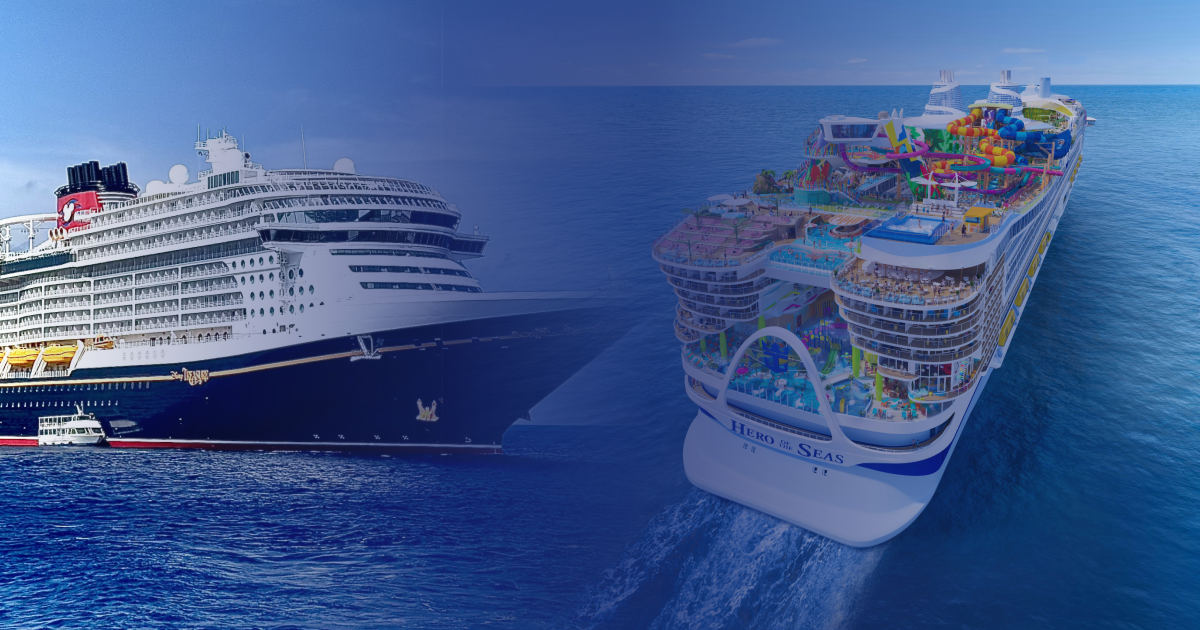
Royal Caribbean wins on price, ships, and teens. Disney wins on theming, service, and little kids. That's the whole comparison in one line. A 4-night Bahamas sailing for a family of four starts around $1,200 to $1,500 on Royal Caribbean and $3,900 to $4,200 on Disney. Disney runs 30 to 60 percent more on comparable itineraries, and that gap is real, documented, and not closing. So the question isn't which line is better. It's whether the Disney magic is worth twice the money for your specific crew. If your kids are 3 to 8 and obsessed with characters, often yes. If you've got teens, a tight budget, or adults who want a casino and a real night out, Royal Caribbean is the smarter book.
Price: Royal Caribbean is roughly half the cost
Here's the thing nobody sugarcoats. Disney is expensive on purpose. For a comparable 7-night Caribbean sailing, Disney averages $380 to $420 per person per night while Royal Caribbean runs $270 to $300. Scale that to a family of four and the gap turns into thousands.
A 7-night Disney Caribbean cruise lands at roughly $8,900 to $13,500 all-in for a family of four in 2026, with inside-cabin base fares starting near $7,000 off-peak and climbing past $11,000 in summer. The same trip on Royal Caribbean, interior cabin, family of four, runs far less, and that's before promos. Royal runs Kids Sail Free on select 2026 sailings and a 60-percent-off-second-guest deal on departures from January 2026 on. Stack those and a family of four can sail for close to the price of 1.4 adult fares.
What's included where it matters. Disney bakes in more. Soft drinks, coffee, juice, and water are free shipwide. Royal charges for soda. Gratuities are $16 per person per night on Disney and $18.50 on Royal for standard cabins, $21 for suites. Disney Wi-Fi, drink packages, and specialty dining are all extra, same as Royal.
The honest caveat on the cheaper option. Royal's low starting fare is the door price, not the final number. Drink packages run $50 to $70 per adult per day. Specialty restaurants charge $30 to $60 a head. Wi-Fi starts around $15 to $20 per day per device. Load up on extras and a 'cheap' Royal cruise creeps toward Disney territory. The difference is you choose those add-ons. On Disney, the premium is locked in before you board.
Ships: Royal goes huge, Disney goes detailed
Royal Caribbean builds the biggest ships on the planet. Icon of the Seas, which launched in January 2024 out of Miami, is the largest cruise ship in the world at 248,663 gross tons, 20 decks, and up to 7,600 passengers at max capacity. Its sister Star of the Seas joined in 2025. These are floating cities with eight themed neighborhoods, a six-slide waterpark called Category 6, a 10-story dry slide, and the tallest waterslide at sea.
Disney's fleet is smaller and newer at the top end. The Disney Treasure debuted in late 2024, and the Disney Destiny, themed around heroes and villains, launched in late 2025 sailing 4- and 5-night Bahamas and Western Caribbean trips from Fort Lauderdale. The Disney Adventure, the line's first Asia-based ship, started sailing from Singapore in March 2026. Disney ships top out around 4,000 passengers, so they feel calmer and less sprawling than Royal's megaships.
The signature stuff. Royal has the FlowRider surf simulator, rock-climbing walls, zip lines, and the AquaDome. Disney has the AquaMouse, a Mickey-themed water ride, plus the AquaDuck water coaster on older ships. If your idea of a ship is a thrill park, Royal wins. If it's immersive theming where every hallway tells a story, Disney wins, and it's not close.
Food: Disney's rotational dining is the trump card
Both lines include main dining in your fare. The way they do it is totally different.
Included dining. Disney's rotational dining is the beloved gimmick that actually works. You rotate through three themed restaurants across your sailing, and your serving team follows you the whole time. Animator's Palate turns the walls into a moving animation show. On the newer ships you get themed rooms tied to Disney IP. Royal's included dining is solid, with a three-course main dining room plus the Windjammer buffet, but it's less of an event.
Paid dining. Disney's adults-only restaurants Palo and Enchanté run $40 to $75 per person and are genuinely excellent. Royal's specialty lineup is broader: Chops Grille steakhouse, Izumi sushi, Giovanni's Italian, and on Icon-class ships, Empire Supper Club. Royal charges $30 to $60 per venue. Royal gives you more paid options. Disney gives you better free ones.
Entertainment: Broadway-caliber vs. activity overload
Disney does theater better than anyone at sea. Full-scale productions of Frozen, Tangled, Beauty and the Beast, and the new Disney The Tale of Moana run in proper theaters with West End-level staging. Character meet-and-greets happen all over the ship with no two-hour park lines. For a kid who loves Disney, this is the entire point.
Royal counters with volume and variety. Aqua shows in purpose-built theaters, ice-skating spectaculars, the Broadway musical lineup, comedy clubs, casinos, and live music in every bar. Royal's edge is that there's always something happening for every age at once. Disney's edge is that what it does, it does perfectly. Teens and adults will find more to do on Royal. Younger kids will be more enchanted on Disney.
Private islands: CocoCay vs. Castaway Cay and Lighthouse Point
Both lines own private Bahamas islands, and both are highlights of any sailing.
Royal's Perfect Day at CocoCay is the activity bomb. Thrill Waterpark has the tallest waterslide in North America, the Daredevil's Peak. There's a wave pool, a zip line, the Coco Beach Club with an overwater cabana, and a giant helium balloon called Up, Up and Away. Some attractions cost extra, but the island itself is included.
Disney runs two islands. Castaway Cay is the original, with shallow, calm play areas built for small kids and a dedicated family beach. Disney Lookout Cay at Lighthouse Point opened on Eleuthera in 2024 as the second stop, with vibrant Bahamian-inspired design, trails, and beaches. Disney's islands lean relaxed and kid-safe. Royal's leans high-energy. Both are free to step onto; the splurge attractions cost extra on each.
Vibe: who's actually on board
Royal Caribbean is mid-market and gloriously mixed. You'll see multigenerational family reunions, couples, friend groups, and first-timers, all on the same ship. There's a casino, adult-only solariums, and real nightlife. Dress code is casual with one or two optional formal nights.
Disney is family-focused, full stop. The crowd skews toward parents with young kids, plus a surprising number of childfree Disney superfans. The service is the best in the mainstream business, and crew learn your kids' names. There's no casino, which is either a dealbreaker or a relief depending on who you are. Royal's loyalty program is Crown & Anchor Society; Disney's is the Castaway Club, where past guests get early booking access.
Cabins and suites: Disney's family rooms are smarter
Disney designed its standard cabins around families and it shows. Most staterooms have a split bathroom, one room with the toilet and sink, another with the tub-shower combo, so two people can get ready at once. The tubs are a genuine win for bathing little kids. Cabins run larger than the mainstream average.
Royal's range is wider and wilder. Standard interiors, ocean-view, and balconies cover the basics, but the showpieces are the Icon-class suites and the multi-level Ultimate Family Townhouse with its own slide. Royal also has true solo cabins on many ships, the studio staterooms with no single supplement. Disney charges solo travelers a supplement to cover the empty second berth, so Royal is friendlier to people sailing alone.
Kids clubs and families: both great, split by age
This is where the money question gets answered.
Disney runs the Oceaneer Club for ages 3 to 12, included in your fare, packed with themed play spaces tied to Disney, Pixar, Marvel, and Star Wars. Tweens get Edge, teens get Vibe, both included. The It's a Small World Nursery handles ages 6 months to 3 years at $9 per hour for the first child with a 2-hour minimum, $8 for additional kids.
Royal runs Adventure Ocean for ages 3 to 12, also included, with a nursery accepting babies from 6 months. The catch: Royal's late-night group babysitting in Adventure Ocean kicks in after 10 p.m. at an hourly rate for ages 3 to 11. Both lines nail the core programming. Disney's is more character-driven and immersive. Royal's is more activity-focused and pairs better with older kids who'd rather hit the FlowRider than meet a princess.
Departure ports and logistics
Royal Caribbean sails from far more U.S. homeports, which means a better shot at driving instead of flying. Icon and Star of the Seas run year-round from Miami, and Royal also bases ships in Fort Lauderdale, Port Canaveral, Galveston, Seattle, and more than a dozen others. If you can drive to the port, you skip four plane tickets.
Disney's U.S. operation is concentrated in Florida, mainly Port Canaveral and Fort Lauderdale, with seasonal sailings from other ports and Alaska runs out of Vancouver in summer. The Disney Adventure is Singapore-only. Fewer homeports means flying is more likely unless you're near Orlando. For a lot of families, the Bahamas itineraries from Florida are the natural starting point on either line.
The verdict: pick your priority
Pick Disney if: your kids are roughly 3 to 8 and love characters, you want the best service and theming at sea, free soda and a no-casino calm appeal to you, and the budget can absorb a 30-to-60-percent premium without flinching.
Pick Royal Caribbean if: you want the most ship for your money, you've got teens who want waterslides and surf simulators, you'd rather bank $2,000 to $4,000 for excursions or a future trip, or you want a casino, nightlife, and the world's biggest ships. For value and variety, it's not close.
Disney vs. Royal Caribbean: quick answers
Is Disney Cruise really worth the extra money?
For families with kids 3 to 8 who love Disney characters, often yes. The theming, rotational dining, and service are the best in the mainstream market. For teens, adults, or tight budgets, Royal Caribbean delivers more activities and bigger ships for roughly half the price.
Which is cheaper, Disney or Royal Caribbean?
Royal Caribbean, by a wide margin. It runs 30 to 60 percent less on comparable sailings. A 4-night Bahamas trip for a family of four starts near $1,200 to $1,500 on Royal versus $3,900 to $4,200 on Disney. Kids Sail Free promos widen the gap further.
Which is better for families with young kids?
Disney. The Oceaneer Club, character experiences, kid-safe Castaway Cay beaches, and family-friendly cabins with tubs are built around young children. Royal is excellent too, but its strengths skew toward older kids and teens who want thrill activities.
Which is better for teenagers?
Royal Caribbean. FlowRider surf simulators, rock walls, zip lines, ice rinks, and bigger teen spaces beat Disney's mid-sized ships on pure adrenaline. Disney's Vibe teen club is good, but Royal simply has more for that age.
Does Disney include more in the base fare?
Yes. Disney includes soft drinks, coffee, and juice shipwide, plus rotational dining and all kids' clubs. Royal charges for soda and has more paid specialty restaurants. That extra inclusion is part of why Disney costs more upfront.
Whichever way you lean, here's the part most people miss. The same cabin on the same sailing can come with hundreds of dollars in onboard credit depending on who books it. Browse Disney and Royal Caribbean sailings on Zipsea and see how much free spending money your trip comes with before you book.
Why Book with Zipsea
The most onboard credit on the internet
We give the absolute most onboard credit back for you to spend onboard.
Prices straight from the cruise lines
Prices and availability come directly from the cruise lines and update in real time.
Never any fees
No service charges, no booking fees — not for anything.
A team that lives and breathes cruises
Cruises are all we sell. You're always talking to someone who knows ships, cabins, and ports.
About Win Lin
CEO & Co-founder of Zipsea. Catch me in the pool, playing lawn games, or at the seafood-themed specialty restaurant. Love trying different cruises and exploring different places with friends and family.